

How Much Does A Kenya Safari Cost 2027 | Expert Guide
Among the top East African destinations for travel and safaris, Kenya is hard to beat. Kenya is known for many things, but one of the most popular is the Great Wildebeest Migration, an annual natural spectacle that draws thousands of safari-goers. Not unexpected, considering the terrifying river crossings and endless giant herds.
The Big 5, the iconic Out of Africa landscape, and the welcoming atmosphere make Kenya an ideal destination for honeymooners, small groups, families, and groups of friends. The country is often fondly called the “birthplace of safari” and has everything a discriminating traveller could want. What does the going rate for a safari to Kenya actually look like? Let us outline the potential components of a Kenyan expedition and the expenses that might be involved:
Kenya Safaris: What Are Your Options?
A number of factors, including the season, the amount of exclusivity desired, the number of non-inclusive activities, the style of lodging selected, and the preference for group vs. individual experiences, determine the overall cost. Although there are some popular choices, the greatest places to visit in Kenya really depend on the tourist. The cost can be affected by factors such as the sort of safari they go on, the combination of many destinations, and the need for charter planes to reach more remote areas.
- Fly-in Safaris & Charters: Luckily, the international airport in Nairobi, Kenya’s capital, is well-known as a flight hub in East Africa. Because of its convenient location, guests have no trouble getting around. The regional airport, which is about 90 minutes distant, is the departure point for nearly all domestic flights. Kenya is home to some breathtaking national parks and conservancies, and a charter is the perfect way to see them all.
- Classic Safaris: The standard safari experience usually involves being accompanied by a knowledgeable guide, or a guide and tracker, on a fully equipped 4×4 game vehicle while you traverse a reserve. As part of the package deal, you can expect to share a vehicle with other guests if you’re travelling in a small group or pair, unless you specifically request a private vehicle (which is subject to availability).
Notably, road transfers are also an option from Nairobi, so charter aircraft aren’t your sole bet. Typically, a 4×4 setup is used for this.
How Much Does a Kenya Safari Cost?
Depending on the level of luxury, the season, and the travel style, the cost of a Kenya safari can range from $1,320 to $3,400 per person, per night, assuming double occupancy. Fly-in safaris in the middle price range cost between $1,430 and $1,760. Luxury fly-in or 5-star safaris can cost as much as $3,400 per night for individuals looking for an opulent experience.
Lodge location also affects accommodation pricing, which may reach $2,420 per night for 5-star properties and $770 for 4-star options during the Great Migration peak season.
Kenya Safari Tour Costs
Please Note: All prices are approximate and based on one person sharing a room during high and low season. Foreign flights, visas, and extracurricular activities are not included. Keep in mind that conservation levies, taxes, and permits can and will alter. Typically, the busiest times of year are between July and October, as well as throughout the holidays and new year.
Kenya Accommodation Costs per Night
Kenya offers a wide variety of lodging options, from classic colonial hotels and traditional tented camps to mobile tented camps that follow the migration to outlandishly luxurious lodges. Of course, if you’re hoping to mix a beach holiday with your Kenyan adventure, you’ll find some truly remarkable private villas, boutique hotels, and luxurious retreats along the coast. Returning to the topic of safaris, apart from luxury, the location of your hotel in Kenya will determine its cost. This is especially true during the Great Migration season, when space is at a premium. A rough estimate of what it will cost to stay in Kenya is as follows:
Kenya Accommodation Pricing
Please Note: All prices are approximate and based on one person sharing a room during high and low season. Foreign flights, visas, and extracurricular activities are not included. Keep in mind that conservation levies, taxes, and permits can and will alter. Typically, the busiest times of year are between July and October, as well as throughout the holidays and new year.
How the time of year can affect the cost of a Kenya safari
Your goals for your trip will determine the ideal time to visit Kenya. In July and August, when the Mara River crossings take place, the Great Migration is at its peak. It should be noted that timings are never guaranteed, and herds’ actual crossing times are unpredictable; yet, this uncertainty is part of the allure. It’s a yearly occurrence that happens in cycles, so you can see herds at different periods.
The rains make the months of mid-March to June and November to the end of December less popular when it comes to low or shoulder season. There will be fewer people, cheaper prices, and excellent game watching at this time, so don’t pass it up. January–March and June–October are the two most popular times of year. The best time to visit Kenya is rather subjective, as trips and safaris are offered throughout the year.
Additional Costs To Consider
You should know that “all-inclusive” isn’t necessarily the most exhaustive definition. When planning a safari in Africa, it’s important to be clear what is and isn’t included in the package. To start, you might want to check out our blog post about African countries that do not require a visa for US citizens. That could solve one problem with the prices right there. Are there any potential hidden expenses that you might encounter? Below is our list for your perusal:
- International flights / getting to the country – as a rule of thumb, consider this excluded
- Getting from place to place – internal transfers may be included with some accommodations, however, some others may be at your own cost. Charter flights are popular in Kenya but road transfers are available to most destinations.
- Vaccinations – certain destinations require vaccinations prior to arrival. These are excluded and you will need to contact your healthcare professional to ensure the requirements are met. Kenya has a requirement of yellow fever for travellers arriving from countries with a risk of yellow fever transmission.
- Tipping is always optional but highly recommended. It’s always worth carrying cash during your travels as it’s the easiest way to go about this. Consult our tipping guide for more information.
Personal and travel insurance - Additional activities – anything over and above the included activity offerings at an accommodation, which typically extends to hot air balloon safaris and helicopter flips or sometimes even cultural excursions.
- The exchange rate – international card payments will likely incur a small fee for paying in a different currency. Kenya’s national currency is the Kenyan Shilling but other currencies, such as the US dollar, are widely accepted and are often the currency required for hot air balloon safaris. Please note: no US Dollar bills printed prior to 2003 will be accepted and post 2006 notes are recommended due to fake note circulation.
If you would like to consult with one of our Africa Safari Experts about your upcoming trip, they can help you plan every detail, including the transfers, so that your trip goes off without a hitch. However, keep in mind that delays are sometimes inevitable when travelling, so it’s best to plan ahead if you can.
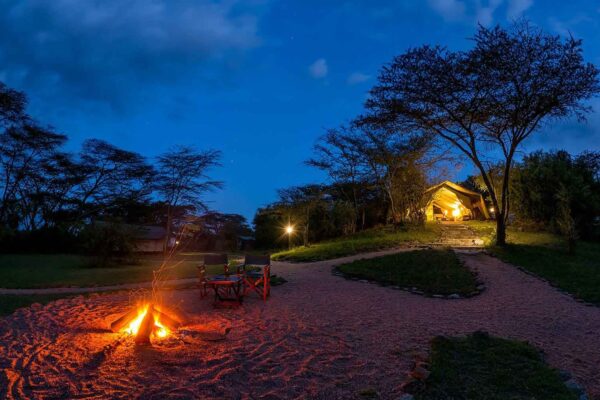
8-Day Amboseli & Masai Mara
Days: 8 | Nights: 7
Combining Amboseli National Park and the Masai Mara National Reserve offers the ultimate Kenyan safari, pairing unparalleled, close-up elephant encounters against the backdrop of Mount Kilimanjaro with the dramatic, predator-rich savannahs of the Great Migration. Our Six-Day Amboseli And Masai Mara safari itinerary has been meticulously planned to take you on an exceptional tour through the most iconic places in Kenya.